If you're settling a parent's estate in Pico Rivera this year, here's a question most families don't think to ask until it's already a problem: when the court or the trust document tells you what the house is worth, whose market is that number describing? The one from six months ago, or the one buyers are actually shopping in this week?
That gap between an official valuation and today's market is the single friction point that catches Pico Rivera families off guard more than any court form. It matters here specifically, and it matters right now, for reasons tied to how this city was built and where its market sits this month.
A City Built in One Decade, Now Passing to the Next Generation
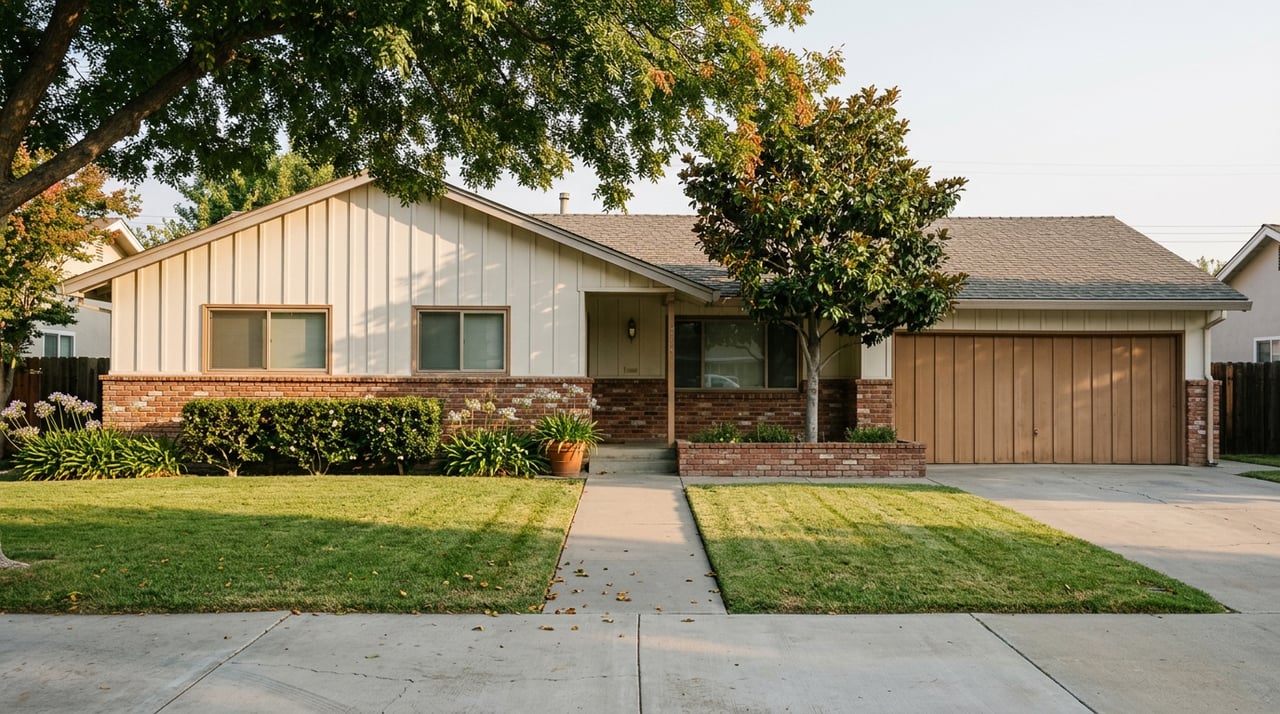
Pico Rivera didn't grow gradually. The towns of Pico and Rivera were mostly farmland until the years right after World War II, when developers bought up the parcels between the Rio Hondo and San Gabriel River and put up tract homes, schools, and churches in a single sustained wave through the 1950s. The two communities incorporated as one city on January 7, 1958, and much of the housing stock you see today, the ranch homes and split-levels with wide driveways, dates from that same narrow window.
A city built almost entirely in one decade ages as a single cohort. The people who bought those homes as young families in the 1950s and 60s are now in their 80s and 90s, or have already passed the property to their children through a trust or a will. That's not a national trend playing out here. It's a local demographic fact baked into Pico Rivera's founding, and it's why trust and probate transactions make up a real share of the city's residential market right now rather than an occasional case.
The Paperwork Surprise: Nothing Files Locally
The first thing that trips up a personal representative or successor trustee in Pico Rivera is where the case actually lives. There's no probate window at a Whittier or Downey branch court. Every Los Angeles County probate case, no matter which city the decedent lived in, gets filed at the Stanley Mosk Courthouse at 111 North Hill Street in downtown Los Angeles. A family expecting to handle this closer to home ends up making the drive downtown instead, and missing that detail early is one of the more common reasons a first filing gets bounced back with corrections.
This only applies if the property is going through formal probate. If the home was already held in a revocable living trust, the successor trustee can typically sell it without setting foot in probate court at all, which is one more reason it pays to know which situation you're actually in before you start making calls.
The Fork That Decides Your Timeline
Once a probate case is open, the single most important early question is whether the personal representative has full or limited authority under the Independent Administration of Estates Act. The petition for probate usually asks for full authority, and courts grant it in the large majority of cases, but the difference between the two paths changes almost everything about how the sale unfolds.
| Full Authority | Limited Authority | |
|---|---|---|
| Court confirmation hearing required | No | Yes |
| Heir notice process | Notice of Proposed Action, 15 days to object | Petition and confirmation hearing, open to public overbids |
| Typical close timeline | 30 to 45 days after accepted offer | Often extends the case by several additional months |
| Risk to the original buyer | Deal closes as negotiated if no objection | Original offer can be outbid in open court |
Under full authority, the representative lists the home, accepts an offer, and closes escrow much like a standard sale, with one added step: a Notice of Proposed Action mailed to all heirs and beneficiaries, who then have 15 days to object. If nobody objects, the sale proceeds without a judge ever reviewing the price.
Under limited authority, or when a will or the estate's circumstances require it, every sale needs a confirmation hearing. The accepted offer becomes a starting bid in open court, and the first overbid has to beat it by at least 10 percent of the first $10,000 plus 5 percent of the remaining balance. Buyers know this going in, which is why buyers under full authority will often pay a bit more for the certainty that their accepted offer is actually the final price.
The Referee's Number Is a Snapshot, Not a Forecast
This is where the timing problem lives. Whenever real property sits in a probate estate, a state-appointed probate referee appraises it as of the date of death, using Form DE-160. Referees are appointed by the California State Controller's Office, they're paid a fee of one-tenth of one percent of the value they appraise, with a minimum of $75 and a maximum of $10,000, and their number becomes the estate's official starting value for tax and distribution purposes.
Here's the part that catches families off guard. If the sale requires court confirmation, California law says it can't close below 90 percent of that referee appraisal. That floor exists to protect the estate from an underpriced sale, and most of the time it never becomes an issue. But a date-of-death appraisal is a snapshot, not a moving target, and Pico Rivera's market has been moving.
As of September 2026, the price per square foot on homes in Pico Rivera had fallen about 9 percent from a year earlier, even while the median list price held roughly flat and the typical home sat on the market for a lengthy 88 days, about the same pace as a year prior. Put those two numbers side by side and you get a market where the sticker price looks stable but what buyers are actually paying per square foot has quietly softened, and homes are taking their time finding a buyer at any price.
If a Pico Rivera home's date-of-death appraisal was set even a few months before that slide, the 90 percent floor built off that older number can sit above what today's buyers are realistically offering per square foot. The estate isn't allowed to accept less without going back to court, which means the family is stuck marketing at a price the current market doesn't quite support, watching days on market stretch out, until either a buyer at that number appears or someone requests a reappraisal. Families operating under full IAEA authority avoid this trap entirely, since the 90 percent floor only binds sales that require court confirmation. That's one more reason the full-versus-limited authority question isn't just paperwork. It's the difference between selling into today's market or selling into a market that's already six months old.
What You Still Have to Disclose, Even as an Exempt Seller
Trustees and personal representatives get a real break on paperwork. Under California Civil Code Section 1102.2(d), a trustee who never lived in the property is generally exempt from completing the standard Transfer Disclosure Statement, and probate sales carry similar limited disclosure obligations because the representative often never lived there either.
That exemption has a hard limit. Known material defects, a leaking roof, unpermitted work, pest damage, still have to be disclosed regardless of exempt status. And under Civil Code Section 1710.2, any death on the property within the past three years must be disclosed if known, no matter how the sale is structured. Trustees who did live in the home within the past year, or who previously owned it, lose the exemption and complete the full disclosure forms like any other seller.
A Practical First 30 Days
- Confirm which situation you're actually in. Locate the trust document, or the Letters Testamentary or Letters of Administration, and check whether full or limited IAEA authority was granted.
- If probate is required, file at the Stanley Mosk Courthouse in downtown Los Angeles, not a local branch, and expect the case to be assigned a state-appointed probate referee shortly after Letters issue.
- Ask when the referee's appraisal was completed relative to today. If it's several months old and the property requires court confirmation, discuss a reappraisal with the estate attorney before setting a list price.
- Gather any HOA documents, permit history, and known defect information early, since these affect disclosure regardless of exempt seller status.
- Decide on a marketing and listing strategy that accounts for the current pace of the local market rather than the pace of a year ago.
A Short FAQ
Does a trust sale in Pico Rivera ever require court confirmation? Not usually. Property held in a revocable living trust generally transfers to the successor trustee without probate court involvement at all, which is one of the main reasons families use trusts.
Can the personal representative just lower the price if the referee's number looks high? Only down to 90 percent of the appraised value if the sale requires court confirmation. Below that floor requires a formal request to the court. Under full IAEA authority without a confirmation requirement, the representative has more flexibility to price to the current market.
Who actually picks the probate referee? The court assigns one from the county's approved list. Families don't choose, though an attorney can request a change if there's a documented conflict of interest.
Selling a home that carries a parent's or grandparent's history is never just a paperwork exercise, and in a city where so many families are working through this at the same time, having someone who understands both the legal mechanics and the local market can make the difference between a stalled listing and a clean close. If you're stepping into the role of trustee, executor, or heir on a Pico Rivera property, Emma Perez Team works with families through exactly this kind of transition, in English and in Spanish, with the patience the process deserves.