If you want to buy in Brea but a single-family home feels out of reach, you are not alone. Many buyers are weighing condos and townhomes because they can offer a lower price point, less day-to-day upkeep, and a practical path into homeownership. The key is knowing what you gain, what you give up, and how to tell if this lifestyle truly fits your needs. Let’s dive in.
Why attached living matters in Brea
Condos and townhomes are a meaningful part of Brea’s housing market, not just a small side category. The city has a 59.7% owner-occupied housing rate, and the median value of owner-occupied homes was $922,300 in the 2020 to 2024 period, according to U.S. Census Bureau QuickFacts. In a city with high home values, attached homes can open more options for buyers who want to own in Brea.
Brea is also planning for more mixed-use and higher-density housing in and around its core. The City of Brea’s 2024 General Plan Annual Report notes continued support for residential and mixed-use sites, along with the Brea Core Plan’s goal of expanded mixed-use and high-density residential development. That tells you attached living is likely to remain an important part of the city’s housing story.
How condos and townhomes compare
In Brea, the price gap between attached and detached homes is noticeable. Redfin city-guide data shows a median sale price of $1,214,383 for single-family homes, compared with $899,659 for condo and co-op homes and $840,665 for townhouses. That means condos are about $314,724 less than the single-family median, while townhomes are about $373,718 less.
That price difference matters, but it does not mean attached homes are inexpensive. In Brea, condos and townhomes may lower your entry price, yet they still sit within a higher-cost market. You may get more affordability than a detached home, but you still need a realistic budget for the full monthly cost.
What the typical Brea layout looks like
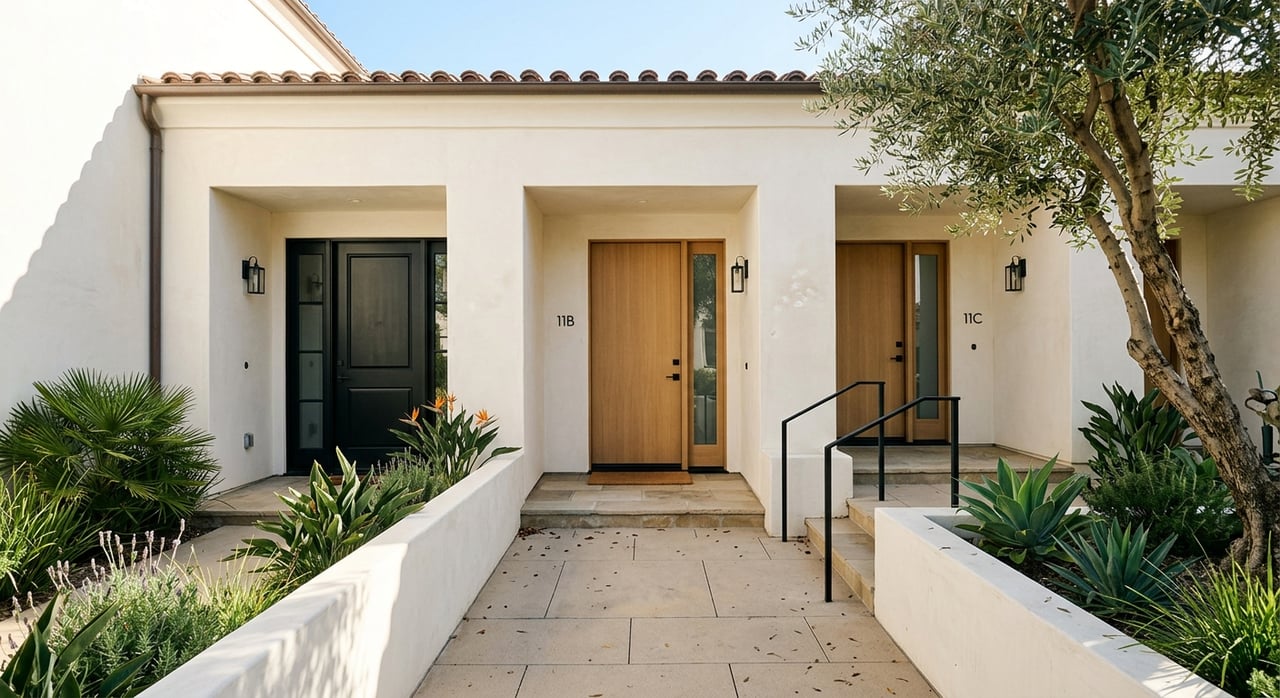
Many attached homes in Brea are built for efficiency. Current listing examples in the research show condos ranging from about 846 square feet to 1,302 square feet, while townhome examples range from about 1,173 square feet to 1,450 square feet. These homes often include two-story layouts, attached or assigned garage space, and smaller outdoor areas like patios instead of large yards.
By comparison, detached homes in Brea commonly offer larger floor plans. Redfin’s Brea guide shows single-family examples ranging from about 1,161 to 3,100 square feet, usually with 3 to 4 bedrooms. If you are deciding between attached and detached living, the trade-off usually comes down to price and maintenance versus space and privacy.
The biggest lifestyle benefits
For many buyers, the main draw of a condo or townhome is simplicity. You may have less exterior upkeep to manage, and in many communities the HOA handles shared items like roofs, common structures, driveways, landscaping, or common areas. If you prefer a home that asks less of your weekends, attached living can feel like a relief.
This lifestyle can also work well if you want a smaller footprint. Brea’s recent development trend has included smaller market-rate units, which the city’s market analysis links to demand from smaller households. If you want ownership without a lot of extra square footage, a condo or townhome may line up well with that goal.
Location can be another advantage. As Brea continues to plan for more mixed-use and higher-density housing near the core, some attached-home options may appeal to buyers who want to be closer to shopping, dining, and everyday conveniences. That can make daily life feel more streamlined, especially if convenience matters as much as square footage.
The trade-offs you need to weigh
The lower list price is only one part of the picture. HOA dues are a required monthly cost, and the Consumer Financial Protection Bureau notes they can range from a few hundred dollars a month to more than $1,000 a month. Those dues are usually paid separately from your mortgage, so they need their own place in your budget.
You also need to think about privacy and control. In an attached home, you may share walls, drive aisles, or community spaces, and exterior changes may require HOA approval. If your top priorities are a bigger yard, more separation from neighbors, or more freedom to modify the exterior, a detached home may still be the better fit.
Why HOA health matters so much
A condo or townhome purchase is also an HOA decision. The California Department of Real Estate says HOAs can levy special assessments for major repairs, replacements, new construction of common-area property, or other unanticipated expenses. That means your monthly dues are not the only number that matters.
A well-run association should have a budget, reserve planning, and a maintenance approach that makes sense for the age and condition of the community. This matters even more in Brea because 31.6% of the city’s housing stock was built before 1970, according to a Southern California Association of Governments local profile. In older communities, you will want to look carefully at maintenance history, reserve strength, and signs of deferred repairs.
What to review before you buy
In California, resale disclosures for common-interest developments are detailed for a reason. Civil Code section 4525 requires information about current regular and special assessments, unpaid assessments and fines, unresolved violation notices, approved assessment changes that are not yet due, and rental or leasing restrictions. Buyers may also request board minutes from the previous 12 months.
That means your review should go beyond the home itself. Before you move forward, it is smart to look closely at:
- HOA dues and what they cover
- The association budget
- Reserve study information
- Current or planned special assessments
- Board meeting minutes
- CC&Rs and community rules
- Any leasing or rental restrictions
- The property’s inspection findings
This is where careful guidance can make a big difference. A condo or townhome can be a great fit, but only if the numbers and the community’s financial health support the purchase.
Financing may look a little different
Financing an attached home can come with a few extra considerations. The Consumer Financial Protection Bureau notes that lenders can sometimes charge slightly more for loans used to buy a condo. It also recommends sharing property taxes and HOA dues with the lender early so the Loan Estimate reflects the true monthly cost.
This is one reason the lowest list price does not always equal the best value. If one property has modest dues and a stable HOA, while another has higher dues or assessment risk, your monthly payment and long-term cost can look very different. A side-by-side comparison is often the clearest way to judge your real options.
Who this lifestyle fits best
Condos and townhomes can be a strong option for first-time buyers. The California Department of Real Estate notes that it is common for first-time buyers to purchase in an HOA-controlled project. If buying a single-family home in Brea feels like too large a leap, attached housing may offer a more manageable first step into ownership.
This lifestyle can also suit downsizers and smaller households. If you want less maintenance, a more efficient layout, and a home that fits your current season of life, a condo or townhome may be a smart match. For some buyers, that trade-off feels worthwhile if it means owning in Brea without taking on more property than they want to manage.
When a detached home may be better
A detached home may still be the better choice if you want more space, more privacy, and fewer shared rules. In Brea, detached homes tend to offer larger floor plans and more outdoor flexibility, but they also come with a higher median sale price. For buyers who want room to grow or more control over the property, paying more may still be the better long-term fit.
The decision often comes down to lifestyle more than labels. If you value a lower-maintenance routine and a smaller footprint, attached living can make a lot of sense. If you care most about a yard, flexible space, and greater separation, a detached home may serve you better.
How to decide in Brea
If you are trying to choose between a condo, townhome, and single-family home in Brea, focus on your real daily life. Think about how much space you need, how comfortable you are with HOA rules, and whether a smaller home would feel freeing or limiting. The best answer is the one that fits both your budget and your routine.
It also helps to compare homes using the full monthly cost, not just the sticker price. In Brea, attached homes can be a smart way to enter the market, but the right choice depends on dues, financing, HOA health, and how long you expect the home to work for you. A thoughtful review now can help you avoid expensive surprises later.
If you are weighing your options in Brea and want clear, steady guidance, Emma Perez is here to help you compare the numbers, understand the trade-offs, and choose a home that fits your life with confidence.
FAQs
Are condos in Brea cheaper than single-family homes?
- Based on the research, yes. Redfin city-guide data shows Brea condos and co-ops had a median sale price of $899,659, compared with $1,214,383 for single-family homes.
Are townhomes in Brea a good option for first-time buyers?
- They can be. The California Department of Real Estate notes that it is common for first-time buyers to purchase in HOA-controlled communities, and townhomes can offer a lower entry price than many detached homes in Brea.
What HOA costs should Brea condo buyers plan for?
- You should plan for regular HOA dues, which may range from a few hundred dollars a month to more than $1,000, plus the possibility of special assessments for repairs or other shared community expenses.
What should you review before buying a Brea townhome?
- You should review the HOA budget, reserve information, dues, any current or planned special assessments, board minutes, CC&Rs, leasing restrictions, and the property inspection.
Are older condo communities in Brea riskier to buy?
- Not always, but older housing stock can make it more important to review reserves, maintenance history, and deferred repair issues carefully, especially since 31.6% of Brea’s housing stock was built before 1970.
Is a detached home better than a condo in Brea?
- It depends on your priorities. Detached homes in Brea often provide more space, privacy, and yard flexibility, while condos usually offer a lower entry price and less exterior maintenance.