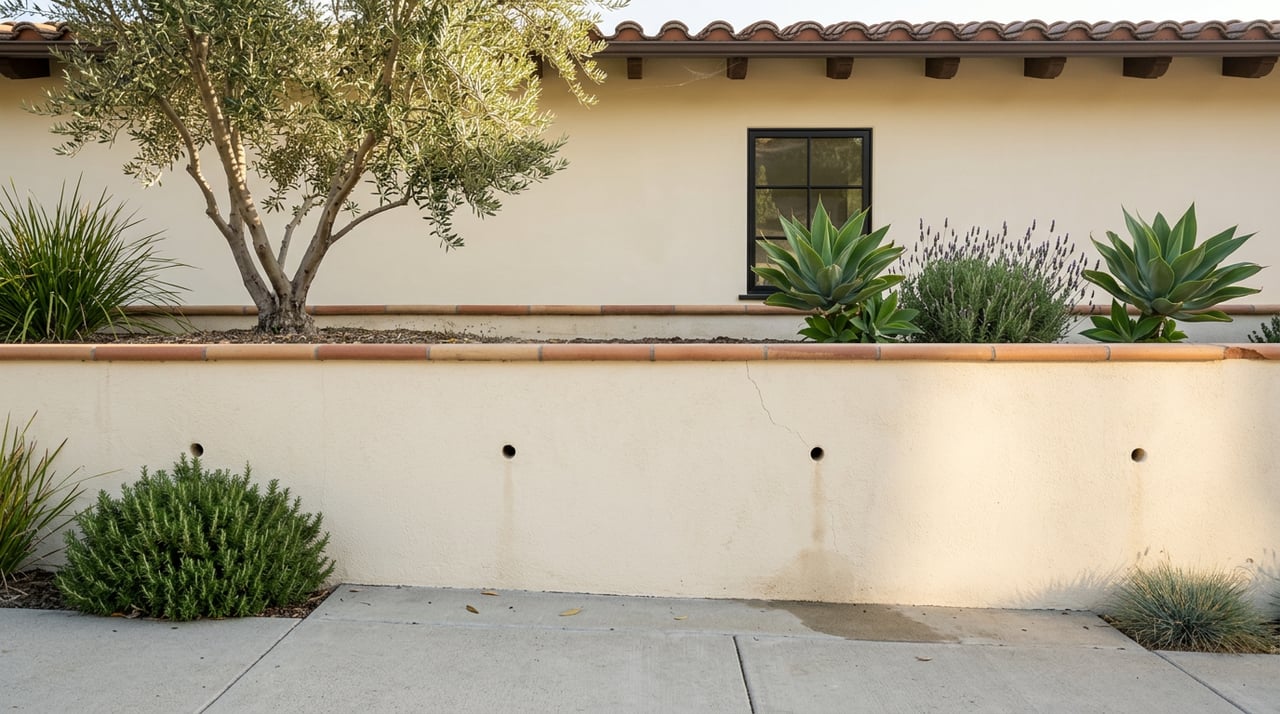
Most owners preparing a Hacienda Heights hillside sale start where the internet tells them to start: the slope. They walk the yard after a rain, photograph the retaining walls, price out a geotech report. That work matters. It is also not usually what stalls the deal.
What stalls the deal is the paper trail behind the slope. Escrows here get extended, renegotiated, or cancelled because a room addition was permitted through the wrong agency, a retaining wall was built to a threshold that no longer exists, or a disclosure packet reads like it was written for a home inside City of Los Angeles limits. Hacienda Heights is not inside City of Los Angeles limits.
The slope is a condition. The paperwork is a transaction. Buyers walk away from the second one faster than the first.
The jurisdiction detail that costs sellers two weeks
Hacienda Heights is an unincorporated community in the Puente Hills, which means permits, grading records, and code enforcement all sit with Los Angeles County, not the City of Los Angeles. Every "LADBS" reference a seller finds online — Baseline Hillside Ordinance thresholds, LADBS plan check timelines, the 6262 Van Nuys Blvd office — is City of LA. It does not govern a home on Gotera Drive or Stimson Avenue.
The practical consequence: when a buyer's agent asks for permit history, the search runs through LA County Public Works and LA County Building & Safety, not LADBS's online portal. Contractors used to City work sometimes pull the wrong records, or worse, quote City fee schedules on a County job. Sellers who assume the two are interchangeable often lose a full inspection cycle before anyone catches the mismatch.
If the property has ever had a room addition, a patio enclosure, a hillside improvement, or a driveway regrade, the correct question is not "was it permitted." It is "was it permitted with LA County, and does the County's file match what is physically on the lot."
What the 2024 storm on Gotera Drive changed
On February 6, 2024, a saturated hillside in the 3100 block of Gotera Drive collapsed into the back of a home, and the LA County Fire Department evacuated three residences in total. The Barron family's master bedroom wall was breached; a secondary slide came down during the initial response. Coverage from ABC7, CBS Los Angeles, and NBC Los Angeles followed the cleanup for weeks.
Two years later, that event still shapes how buyers and their lenders read a Hacienda Heights hillside listing. Underwriters ask for photographs of drainage paths after a heavy rain. Insurance carriers ask whether adjacent slopes have been tarped or graded since 2024. Buyer's agents ask for a geotech opinion earlier in the process, sometimes before the formal inspection contingency opens.
None of this makes a hillside home unsellable. It does mean the seller who has documentation ready on day one closes on a different timeline than the seller who assembles it during escrow.
Where unpermitted work tends to hide in the local housing stock
Hacienda Heights homes were built across a long window, roughly the 1950s through the 1990s, with post-war tract development on flatter parcels and later hillside construction climbing into the Puente Hills. That range shows up in what inspectors flag.
| Era | Common finding | Why it matters at sale |
|---|---|---|
| 1950s–1960s tract | Original electrical panel, galvanized supply lines | Insurer questions, lender re-inspections |
| 1960s–1970s | Aluminum branch wiring | Buyer request for remediation credit |
| 1980s hillside | Polybutylene plumbing | Repipe negotiation, insurance flag |
| 1980s–1990s | Room additions and patio enclosures without County permits | Disclosure exposure, appraisal issues |
| 1990s and newer | Post-tension slabs | Requires specific inspection protocol |
The additions are the wildcard. A converted garage or an enclosed patio that reads as living space on the marketing but does not appear in County records will get caught by an appraiser measuring square footage against tax roll. That is a conversation you want to have before the listing goes live, not after an offer is in.
The retaining wall questions buyers ask now
California requires sellers to disclose material facts affecting value and condition, including slope stability, retaining walls, drainage, fire hazards, and unpermitted work. That obligation existed before 2024. What has changed is buyer specificity. The questions coming in during inspection contingency now read like a checklist.
Expect at least these:
- How tall is the wall from the bottom of the footing to the top, not from finish grade
- Was it permitted, and is the final inspection card on file with LA County
- Does it support a surcharge, meaning a driveway, pool, or structural load within a horizontal distance roughly equal to the wall height
- Are the weep holes clear, and where does the drain line daylight
- Has the wall moved, bulged, or cracked at the joints since the 2024 storm season
A wall built decades ago at a height that was under the permit threshold at the time may sit above the threshold under current LA County practice, particularly if it holds back a driveway or a slope. Buyers are not asking the seller to bring old work up to current code. They are asking the seller to know the difference so the disclosure is accurate.
A pre-listing sequence that actually shortens escrow
The sellers who close on schedule tend to run the same rough order of operations. This is not a checklist to hand a contractor. It is the order in which a Hacienda Heights hillside listing gets its paperwork in one direction.
- Pull the County permit history for the parcel and compare it to what is physically on the lot. Note every gap.
- Walk the property with a photographer within 48 hours of a rain event. Document drainage paths, wall condition, and any pooling.
- Retain a home inspector with experience on LA County hillside properties, not only City of LA work. Local inspectors flag aluminum wiring, polybutylene, and post-tension slabs on sight.
- If any wall shows movement, cracking, or drainage failure, commission a structural or geotechnical evaluation before pricing. The report is a disclosure asset, not a liability.
- Close out any open or expired County permits before listing. An open permit on record can freeze a lender at underwriting.
- Prepare a clean disclosure packet that names the walls, the drainage paths, the additions, and the permit status for each. Ambiguity is where renegotiation lives.
Sequence matters. Ordering a geotech report before you know what the permit file says means you may be answering the wrong question.
Reading the current market before you spend on repairs
Not every pre-listing dollar earns its way back. Hacienda Heights market conditions right now are mixed depending on which cut of the data you read. Redfin's three-month view ending May 2026 puts the median sale price near $1.0 million with homes averaging around 36 days on market. Movoto's June 2026 snapshot shows a higher median list near $1.15 million and 75 days on market, which suggests the listing-to-sale gap has widened at the top of the market.
Read together, those numbers say something specific for hillside sellers. Homes priced correctly and prepared correctly are still moving in about five weeks. Homes carrying deferred paperwork are sitting at the higher price point and stretching past two months. The premium buyers pay for a documented, cleanly disclosed hillside home is real, and it is currently larger than the premium they pay for cosmetic upgrades.
That has direct implications for repair budget. On a hillside listing here, a dollar spent on permit close-out, geotech documentation, and drainage repair tends to return more than a dollar spent on kitchen refresh. The market is asking for confidence about the slope, not a new backsplash.
A short FAQ
Do I need a geotech report to list a hillside home in Hacienda Heights? Not automatically. You need one if there is visible slope movement, retaining wall distress, or drainage failure, or if a buyer or lender requests it during escrow. Commissioning it before listing turns a potential surprise into a disclosure document you control.
My addition was built in the 1980s and I never saw a permit. What do I do? Pull the County permit history first. If the addition is unpermitted, you have options: retroactive permitting through LA County, adjusted pricing that reflects the condition, or clear disclosure with a credit. All three are workable. Silence is not.
Will the 2024 Gotera Drive events show up in my appraisal? Not directly, and not by address. What shows up is the underwriting caution that has spread across hillside parcels in the area. Sellers who arrive with drainage documentation and a clean disclosure packet neutralize most of that friction.
Is City of LA permit information ever relevant to my Hacienda Heights sale? Only as background reading. Your permit file lives with LA County. If a contractor or consultant references LADBS for your parcel, that is your cue to ask what jurisdiction they think they are working in.
Selling a hillside home here rewards preparation more than it rewards renovation. The sellers who close on time and at price are the ones who treat the disclosure packet as the product and the property as the evidence. If you are thinking about a listing in Hacienda Heights this year, Emma Perez and the Here For You Real Estate team can walk your property, review your County records, and map the sequence that fits your timeline. Contact us when you are ready to have that conversation.